

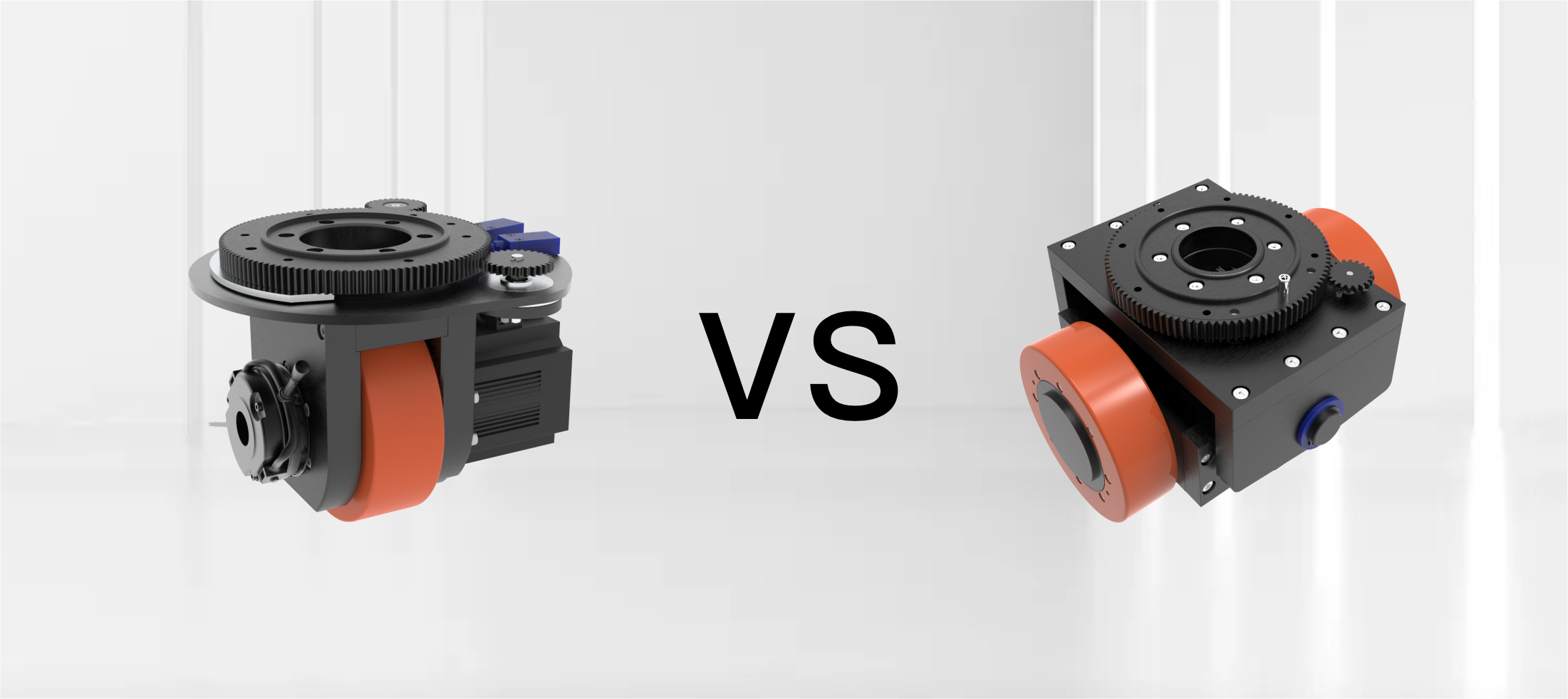
Seleccionar la estructura de rueda motriz adecuada es una decisión de ingeniería clave en el desarrollo de AGV. Las soluciones de tracción diferencial, tracción direccional y omnidireccional no son sustitutos competitivos, sino tecnologías establecidas diseñadas para diferentes requisitos operativos.
Esta comparación se centra en la complejidad de la ingeniería, la integración del sistema y el funcionamiento a largo plazo, en lugar de la capacidad de movimiento teórica.
1. Principios fundamentales de ingeniería de cada concepto de accionamiento
Tracción diferencial
El giro y la rotación se logran controlando la diferencia de velocidad entre dos ruedas motrices del AGV.
El modelo cinemático es simple y bien entendido, lo que lo hace adecuado para AGV con rutas definidas y ciclos operativos estables.
Tracción direccional
Cada rueda combina propulsión y dirección, lo que permite un movimiento flexible y un radio de giro reducido.
Esta estructura se aplica a menudo cuando las limitaciones de espacio o el control de orientación son críticos.
Tracción omnidireccional
Basado en mecanum o en la coordinación de múltiples ruedas, permite el movimiento en cualquier dirección.
Normalmente se utiliza en aplicaciones que requieren movimiento lateral o posicionamiento preciso en estaciones de trabajo.

2. Consideraciones sobre la complejidad e integración del sistema
Desde una perspectiva de implementación de ingeniería:
-
Sistemas de ruedas motrices AGV diferenciales
-
Cinemática y lógica de control sencillas
-
Integración mecánica sencilla
-
Puesta en marcha eficiente y reutilización de parámetros
-
-
Sistemas de tracción direccional
-
Control combinado de dirección y propulsión
-
Mayores requisitos de rendimiento y sincronización del controlador
-
Mayor esfuerzo de integración mecánica y de control
-
-
Sistemas omnidireccionales
-
Cálculo de movimiento complejo
-
Sensible a la consistencia de las ruedas y las condiciones del suelo
-
Gran dependencia de la sintonización a nivel de sistema
-
Para proyectos con plazos ajustados y riesgos controlados, la tracción diferencial sigue siendo una opción práctica.
3. Operación y mantenimiento a largo plazo
En despliegues de AGV de alto rendimiento o a escala de flota, la estabilidad a largo plazo a menudo supera la flexibilidad de movimiento:
-
Tracción diferencial
-
Trayectorias de carga claras y desgaste predecible
-
Mantenimiento y gestión de repuestos simplificados
-
-
Tracción direccional
-
Puntos de desgaste adicionales en los mecanismos de dirección
-
Mayores requisitos de calibración a largo plazo
-
-
Tracción omnidireccional
-
Desgaste inevitable del rodillo
-
Mayor sensibilidad a la planitud del suelo
-
Desde la perspectiva del costo total de propiedad, los sistemas de ruedas motrices AGV diferenciales suelen ser más fáciles de gestionar.

4. Lógica de selección orientada a la aplicación
Basado en los requisitos típicos del proyecto:
-
Logística de almacén y rutas de transporte repetitivas
→ Soluciones de tracción diferencial que priorizan la fiabilidad y la escalabilidad -
Entornos con espacio limitado que requieren orientación flexible
→ Soluciones de tracción direccional con mayor libertad de movimiento -
Procesos que requieren movimiento lateral o acoplamiento preciso
→ Soluciones de tracción omnidireccional para casos de uso específicos
No existe una solución universal de rueda motriz para AGV, solo opciones adecuadas para cada aplicación.

5. Lo que ofrecemos para aplicaciones de tracción diferencial
Para sistemas de ruedas motrices AGV diferenciales, proporcionamos módulos diseñados en lugar de componentes aislados:
-
Servomotores, cajas de engranajes y conjuntos de ruedas coincidentes
-
Límites de carga, velocidad y ciclo de trabajo claramente definidos
-
Interfaces mecánicas optimizadas para la integración del chasis
-
Recomendaciones de parámetros probados para reducir el tiempo de puesta en marcha
El objetivo no es la complejidad estructural, sino el rendimiento predecible y la fiabilidad operativa a largo plazo.
Compartir:
Módulos de rueda motriz diferencial para sistemas de ruedas motrices de AGV: resolución de los desafíos de estabilidad e integración
Ruedas motrices de robots para robots móviles: consideraciones de ingeniería desde la arquitectura de accionamiento hasta el rendimiento