

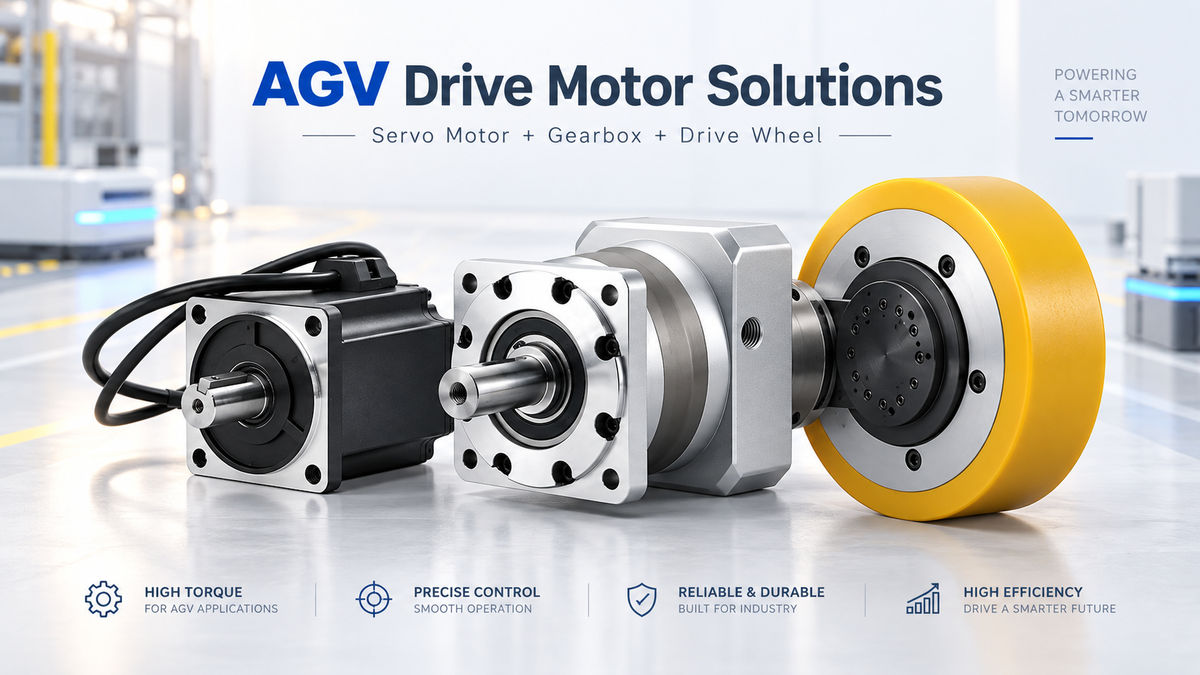
AGV'ler ve AMR'ler çok farklı tahrik sistemleri kullanabilir. Doğru seçim; aracın yüküne, hızına, mevcut montaj alanına, direksiyon yöntemine ve kontrol gereksinimlerine bağlıdır.
Bazı projeler için ayrı bir servo motor, şanzıman ve tekerlek hala en pratik kurulumdur. Kompakt araçlar için entegre bir tahrik tekerleği daha fazla yer tasarrufu sağlayabilir. Göbek motorları daha hafif mobil robotlar için iyi çalışabilirken, direksiyon tahrik üniteleri genellikle aracın hem yüksek yük kapasitesine hem de esnek harekete ihtiyaç duyduğu durumlarda kullanılır.
Her AGV'ye uyan tek bir tahrik sistemi yoktur. Önemli nokta, her çözümün nasıl çalıştığını ve nerede en uygun olduğunu anlamaktır.

AGV Tahrik Motor Sistemi Nedir?
Bir AGV tahrik sistemi sadece motordan ibaret değildir.
Çoğu uygulamada tahrik sistemi; servo motor, şanzıman, tahrik tekerleği, enkoder, fren ve kontrolcü içerir. Aktif direksiyon gerektiren araçlar için sistem, bir direksiyon motoru ve direksiyon şanzımanı da içerebilir.
Bu bileşenler; aracın hızını, torkunu, hareket yönünü, frenlemesini ve konumlandırma hassasiyetini kontrol etmek için birlikte çalışır.
Küçük bir iç mekan AMR'si ve 10 tonluk endüstriyel bir AGV her ikisi de servo motor kullanabilir ancak gerçek tahrik sistemi tamamen farklı olabilir. Motor gücü, dişli oranı, tekerlek çapı, tekerlek başına düşen yük ve montaj alanı gibi faktörlerin hepsinin birlikte değerlendirilmesi gerekir.
Yaygın AGV Tahrik Motoru Çözümleri
Aşağıda, günümüzde piyasada bulunan en yaygın seçenekleri inceliyoruz.
1. Servo Motor + Şanzıman + Tekerlek
Geleneksel AGV tahrik yapısı şöyledir: Servo Motor → Şanzıman → Tahrik Tekerleği
Servo motor, kontrollü hız ve tork sağlar. Şanzıman motor hızını düşürür ve çıkış torkunu artırırken, tekerlek kuvveti yere iletir.
Bu çözümün en büyük avantajlarından biri esnekliktir. Motor, şanzıman ve tekerlek; araç tasarımına göre ayrı ayrı seçilebilir. Mühendisler; tüm tahrik sistemini değiştirmeden motor gücünü, redüksiyon oranını, tekerlek çapını, freni, enkoderi ve tekerlek malzemesini değiştirebilirler.
Bu, söz konusu çözümü birçok endüstriyel AGV, özellikle de özel yapım araçlar ve ağır hizmet uygulamaları için uygun kılar.
Bunun karşılığındaki bedel ise montaj alanıdır. Motor, şanzıman ve tekerlek ayrı bileşenler olduğundan, genel yapı genellikle daha büyüktür ve daha fazla montaj ve hizalama çalışması gerektirir.
Şasinin yeterli alana sahip olduğu ve bileşen esnekliğinin önemli olduğu projeler için bu hala çok pratik bir AGV tahrik motoru çözümüdür.
2. Entegre Servo Tahrik Tekerleği
Entegre bir servo tahrik tekerleği; motoru, şanzımanı ve tekerleği daha kompakt bir tahrik modülünde birleştirir.
AGV üreticisi, her bir parçayı ayrı ayrı tasarlayıp monte etmek yerine, şasiye eksiksiz bir tahrik ünitesi takabilir. Bu, montaj alanını azaltmaya yardımcı olur ve mekanik düzeni basitleştirir.
Entegre tahrik tekerlekleri, genellikle şasi alanının sınırlı olduğu AGV ve AMR'lerde kullanılır. Ayrıca montaj işlerini azaltabilir ve tahrik sistemi tek bir modül olarak ele alınabildiği için değişimi kolaylaştırabilirler.
Geleneksel ayrı motor ve şanzıman yapısıyla karşılaştırıldığında, entegre tasarım araç tasarımcısına bireysel bileşenleri değiştirme konusunda daha az özgürlük tanır. Ancak birçok AGV projesi için daha küçük boyut ve daha basit montaj daha önemlidir.
Bu tür tahrik sistemleri genellikle depo AGV'lerinde, kompakt AMR'lerde, otomatik taşıma arabalarında ve alçak profilli mobil robotlarda kullanılır.
3. AGV Göbek Servo Motoru
Göbek servo motoru, motoru doğrudan tekerleğin içine entegre eder.
Bu, geleneksel mekanik iletim yapısının çoğunu ortadan kaldırır ve tüm tahrik ünitesini çok kompakt hale getirir. Katı yükseklik veya alan sınırlamaları olan AGV'ler için bu faydalı bir çözüm olabilir.
Göbek motorları ayrıca daha az iletim bileşeni kullanır, bu da mekanik tasarımı basitleştirebilir.
Ancak kompakt boyut, bir göbek motorunun her proje için uygun olduğu anlamına gelmez.
Daha ağır araçlar için tork, tekerlek yükü, ısı dağılımı, çalışma süresi, şok yükü ve zemin koşulları daha önemli hale gelir. Hafif bir iç mekan robotunda iyi çalışan bir göbek motoru, endüstriyel bir ortamda sürekli çalışan yüksek yük kapasiteli bir AGV için uygun olmayabilir.
Bu nedenle göbek servo motorları; daha çok hafif ve orta hizmet tipi AGV'lerde, servis robotlarında, kompakt AMR'lerde ve alanın büyük bir tasarım kısıtı olduğu diğer mobil platformlarda kullanılır.

4. Servo Direksiyon Tahrik Ünitesi
Bir direksiyon tahrik ünitesi, tahrik ve direksiyon işlevlerini tek bir düzeneği birleştirir.
Tipik bir yapı; bir tahrik motoru, direksiyon motoru, şanzıman, tekerlek, enkoder ve direksiyon mekanizmasını içerir.
Tahrik motoru aracın hareketini kontrol ederken, direksiyon motoru tekerleğin yönünü değiştirir. Bu, AGV'nin daha özgürce dönmesini sağlar ve bağımsız tekerlek direksiyonunu da destekleyebilir.
Bu sistem türü; büyük AGV'lerde, çok yönlü mobil platformlarda ve ağır hizmet tipi taşıma araçlarında yaygın olarak kullanılır.
Ağır araçlar için direksiyon tahrik ünitesi, yüksek sürüş torkunu esnek direksiyonla birleştirdiği için özellikle yararlı olabilir. Şasi tasarımına bağlı olarak, birkaç direksiyon tahrik tekerleği keskin dönüşler, yanal hareket veya diğer özel hareket gereksinimlerini elde etmek için birlikte çalışabilir.
Sistem, temel bir motor ve tekerlek kurulumundan daha karmaşıktır ancak araca çok daha büyük hareket esnekliği kazandırır.

Dört AGV Tahrik Çözümü Nasıl Karşılaştırılır?
| Tahrik Çözümü | Ana Avantaj | Ana Sınırlama | Tipik Uygulama |
| Servo Motor + Şanzıman + Tekerlek | Esnek Bileşen Seçimi | Daha Fazla Montaj Alanı Gerektirir | Standart ve Ağır Hizmet AGV'leri |
| Entegre Servo Tahrik Tekerleği | Kompakt ve Montajı Kolay | Ayrı Bileşenlerden Daha Az Esnek | AGV'ler ve AMR'ler |
| Göbek Servo Motoru | Çok Kompakt Yapı | Tork ve Isı Dikkatli Değerlendirilmeli | Hafif ve Orta Hizmet Robotları |
| Servo Direksiyon Tahrik Ünitesi | Tahrik ve Direksiyonu Birleştirir | Daha Karmaşık Yapı ve Kontrol | Ağır Hizmet ve Esnek AGV'ler |
Kabul edelim, "en iyi" çözüm diye bir şey yoktur. Seçim sadece hangi motorun daha güçlü olduğuna göre yapılmamalıdır. Aracın bütünsel tasarımı daha önemlidir.
Yeterli montaj alanına sahip geleneksel bir AGV için, ayrı bir servo motor + şanzıman + tekerlek genellikle esnek ve pratik bir seçenektir.
Kompakt AGV'ler ve AMR'ler için entegre bir servo tahrik tekerleği şasi tasarımını basitleştirebilir.
Sıkı alan sınırlarına sahip daha hafif mobil robotlar için bir göbek servo motoru uygun olabilir.
Hem yüksek yük kapasitesine hem de esnek direksiyona ihtiyaç duyan büyük araçlar için, servo direksiyon tahrik ünitesi genellikle daha iyi bir yöndür.
Doğru AGV Tahrik Motoru Nasıl Seçilir?
Bir AGV tahrik motoru seçerken, birçok mühendis önce motor gücüne bakar. Uygulamada sadece motor gücü yeterli değildir.
Toplam araç ağırlığı ve yükü temel yük gereksinimini belirler, ancak mühendislerin bu ağırlığın tahrik tekerlekleri ve destek tekerlekleri arasında nasıl dağıtıldığını da bilmeleri gerekir.
Araç hızı bir diğer önemli faktördür. Motor hızı, dişli oranı ve tekerlek çapı birlikte çalışmalıdır. Tekerlek çapı artarsa, aynı motor hızında araç hızı artabilir, ancak gereken tekerlek torku da değişir.
Kalkış torku da önemlidir. Bir AGV kalkış yaparken, hızlanırken, dönerken veya bir eğimde hareket ederken sabit hızda gittiğinden daha fazla torka ihtiyaç duyar.
Montaj alanı da nihai çözümü değiştirebilir. Yeterli iç alana sahip bir araç, ayrı bir servo motor ve şanzıman kullanabilir. Alçak profilli bir AGV, entegre bir tekerleğe veya özel olarak düzenlenmiş bir şanzıman yapısına ihtiyaç duyabilir.
Direksiyon yöntemi de önemlidir. Diferansiyel tahrikli bir AGV ile bağımsız olarak yönlendirilen ağır hizmet tipi bir AGV, çok farklı motor ve tekerlek gereksinimlerine sahiptir.
Bu nedenle, düzgün bir tahrik seçimi normalde birkaç temel parametreyle başlar:
-
Araç ağırlığı ve yükü
-
Hedef seyahat hızı
-
Tekerlek çapı
-
Mevcut montaj alanı
-
Gereken motor torku
-
Dişli oranı
-
Direksiyon yöntemi
-
Zemin koşulu
-
Fren gereksinimi
-
Enkoder tipi
-
Çalışma döngüsü
Bu parametreler, önce motoru seçip aracı daha sonra ona göre ayarlamak yerine, birlikte değerlendirilmelidir.
HKT ROBOT: Güvenilir AGV Tahrik Motoru Çözüm Ortağınız
2013 yılında kurulan HKT ROBOT, dünya çapındaki müşterilere AGV tahrik motoru çözümleri sağlama konusunda uzmandır. Ayrıca AGV ve AMR tahrik bileşenleri ve hareket çözümleri konusunda da uzmanız. Ana ürünlerimiz; farklı mobil robot uygulamaları için servo motorlar, şanzımanlar, AGV tahrik tekerlekleri, diferansiyel tahrik tekerlekleri, direksiyon tahrik tekerlekleri ve ağır hizmet tipi tahrik sistemlerini içerir.
10.000 m²'lik üretim tesisi ve deneyimli bir mühendislik ekibi ile müşterilerimize bileşen seçiminden teknik değerlendirmeye, üretimden satış sonrası hizmetlere kadar destek sağlıyoruz. Ayrıca aracın yükü, hızı, tekerlek çapı, montaj alanı, direksiyon yöntemi ve kontrol gereksinimlerine göre özelleştirilmiş çözümler de sunabiliyoruz.
AGV tahrik sistemlerinde güvenilirlik ve kullanım ömrü, sadece motor gücüne bağlı değildir. Yük, tork, dişli oranı, görev döngüsü, ısı dağılımı, zemin koşulları ve tekerlek teması; uzun vadeli performansı etkiler. Ekibimiz, bir motor, şanzıman ve tekerlek kombinasyonu önerirken bu faktörleri bir arada değerlendirir.
HKT ROBOT, 2 yıl garanti ve 24 saat teknik destek sağlar. İster kompakt bir AMR ister ağır hizmet tipi bir AGV geliştiriyor olun, pratik ve güvenilir bir tahrik çözümü seçmenize yardımcı olabiliriz.
Paylaşmak:
Ağır Hizmet Tipi AGV Tekerlekleri (Yüksek Yük Kapasiteli Malzeme Taşıma İçin)
Forklift AGV'ler için AGV Tahrik Tekerlekleri