

En almacenes inteligentes y líneas de producción automatizadas, los AGV y AMR deben detenerse, arrancar, girar y desplazar cargas constantemente en pasillos estrechos, al tiempo que estacionan con precisión en estaciones, estanterías o puntos de carga. Con un espacio limitado en el chasis, cargas variables y una operación ininterrumpida, el sistema de tracción debe ofrecer un par motor potente, un posicionamiento preciso y un rendimiento estable.
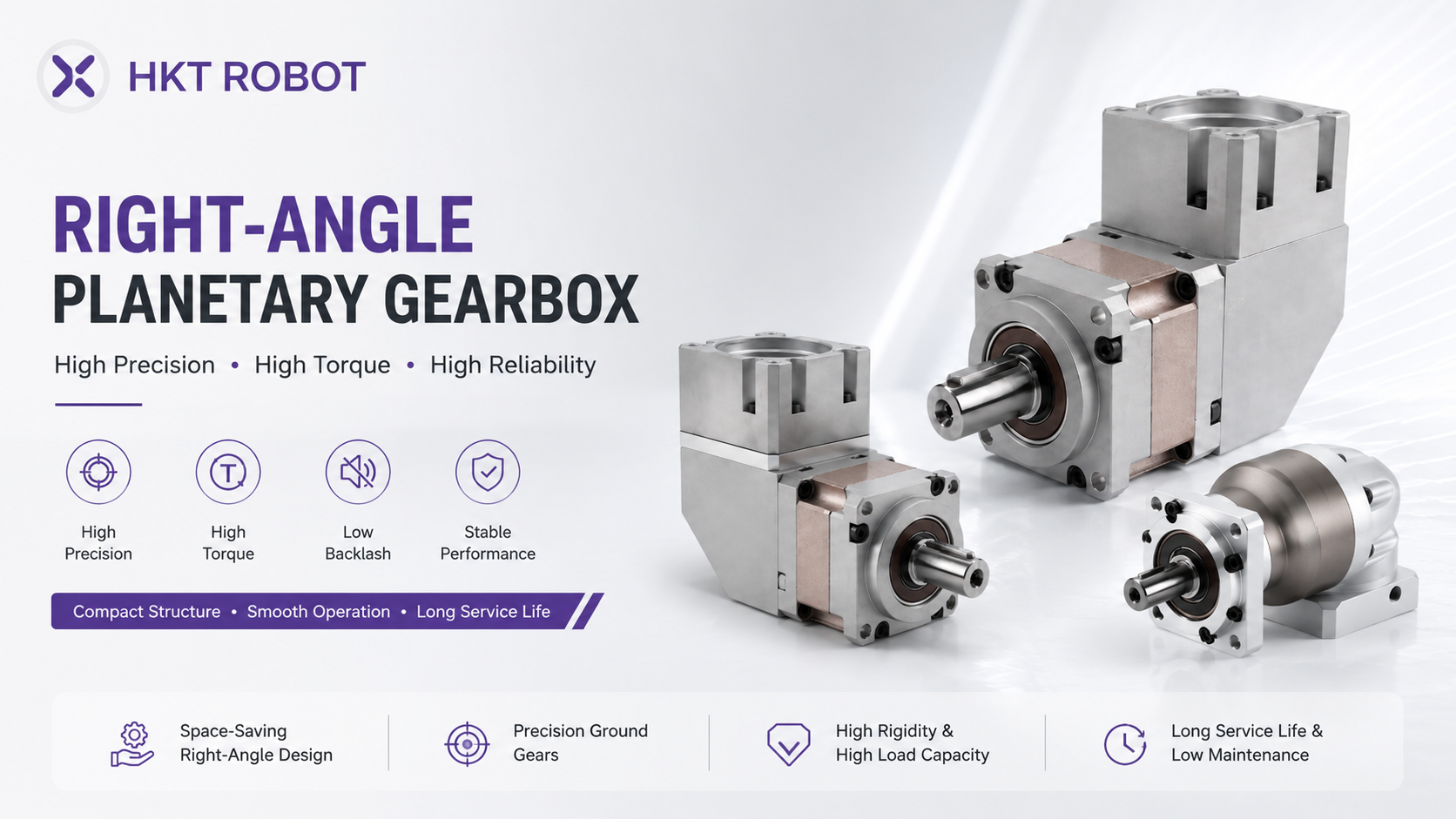
Un reductor planetario de servomotor en ángulo recto lo hace posible en un diseño compacto. Transfiere la potencia a 90 grados, aumenta el par de salida y, al mismo tiempo, mejora la precisión del control. El resultado son arranques más suaves, un control de giro más preciso y una operación continua más fiable para los AGV y AMR.

Servomotor: El núcleo del control de movimiento preciso de AGV y AMR
Un servomotor es una parte importante del sistema de control de movimiento en un AGV o AMR. Convierte los comandos del controlador en una salida precisa de velocidad, par y posición.
Con retroalimentación mediante codificador y control de bucle cerrado, el sistema de servo monitorea el motor en tiempo real y ajusta su salida de acuerdo con los comandos de movimiento del vehículo.
Cuando un AGV o AMR necesita arrancar, reducir la velocidad, girar, retroceder o acoplarse en una posición específica, el servomotor responde rápidamente. Esto permite que el vehículo siga su ruta y velocidad planificadas con mayor fluidez.
En aplicaciones de AGV y AMR, los servomotores ofrecen varias ventajas importantes:
-
Respuesta rápida: Adecuado para arranques, paradas, movimientos hacia adelante y hacia atrás frecuentes.
-
Control de velocidad estable: Ayuda al vehículo a moverse suavemente bajo diferentes cargas.
-
Control de posición preciso: Mejora la precisión de acoplamiento en estanterías, estaciones de trabajo, líneas de transporte y puntos de carga.
-
Salida de par controlada: Reduce el impacto del arranque y mejora la estabilidad a baja velocidad.
-
Fácil integración del sistema: Funciona con codificadores, servoaccionamientos, controladores y el sistema de control principal del vehículo.
Sin embargo, los servomotores normalmente operan a altas velocidades. Si un servomotor acciona directamente una rueda o mecanismo de dirección, el par de salida puede ser demasiado bajo y la velocidad demasiado alta.
La longitud de instalación también puede ser difícil de adaptar dentro de un chasis compacto de AGV o AMR.
Por esta razón, un servomotor con reductor suele ser una mejor solución para aplicaciones de robots móviles.

Reductor planetario en ángulo recto: Un componente de transmisión clave para chasis de AGV compactos
Un reductor planetario en ángulo recto es un reductor de precisión con su entrada y salida dispuestas a 90 grados.
Reduce la velocidad de salida del servomotor, aumenta el par de salida y cambia la dirección de la transmisión de potencia. Esto permite instalar el motor y el eje de salida en ángulo recto.
Esta estructura es especialmente útil para AGV y AMR con espacio interno limitado en el chasis.
Cuando se utiliza un reductor en línea estándar, el motor, el reductor y la rueda normalmente deben estar dispuestos en la misma dirección. Esto puede ocupar una gran cantidad de espacio horizontal o vertical.
Un reductor de 90 grados para AGV permite que el motor se instale al lado de la rueda, encima del módulo de la rueda o dentro del chasis. Esto hace que los módulos de tracción y dirección sean más compactos y deja más espacio para baterías, controladores, sensores, cables y otros componentes.

Transmisión de potencia de 90 grados
Un reductor planetario en ángulo recto cambia la dirección de la salida del servomotor en 90 grados antes de transmitir la potencia a la rueda motriz o al mecanismo de dirección.
Al mismo tiempo, reduce la velocidad y aumenta el par. Esto resuelve el problema de la disposición del motor y el eje de salida cuando no pueden instalarse en el mismo eje.
Esta estructura es adecuada para:
-
Sistemas de ruedas motrices de AGV
-
Módulos de dirección y tracción de AMR
-
Mecanismos de ruedas directrices
-
Robots móviles de bajo perfil
-
Vehículos compactos de manipulación de materiales
Ahorro de espacio de instalación en el chasis
El chasis de un AGV o AMR normalmente debe contener el motor, la batería, el servoaccionamiento, el controlador, los cables, los sensores de seguridad y otros componentes. El espacio disponible suele ser muy limitado.
El diseño en ángulo recto reduce la longitud de instalación del sistema de transmisión en una dirección. Permite que el motor se ajuste más cerca del borde del chasis o del módulo de la rueda.
Esto ayuda a reducir la altura total del vehículo, crear un chasis más pequeño y mejorar el uso del espacio interno.
Para vehículos de bajo perfil y robots móviles compactos, un reductor compacto de ángulo de 90 grados puede proporcionar una ventaja estructural importante.
Aumento del par de salida
Después de conectar el servomotor a un reductor planetario en ángulo recto, su velocidad se reduce y su par de salida aumenta.
El par adicional ayuda a los AGV y AMR a arrancar con mayor suavidad, subir pendientes, girar bajo carga y transportar mercancías más pesadas.
Los AGV y AMR suelen alternar entre condiciones de carga y vacío. Seleccionar la relación de reducción correcta puede proporcionar suficiente reserva de par y reducir el riesgo de que el servomotor funcione bajo alta carga durante largos periodos.
Mejora de la estabilidad del movimiento a baja velocidad y del posicionamiento
Cuando un AGV o AMR se acerca a una estación de trabajo, estantería, línea de transporte o punto de carga, normalmente necesita reducir la velocidad y realizar pequeños ajustes de posición.
Un reductor planetario de precisión de baja holgura y alta rigidez reduce los retrasos en la respuesta y los errores de posición causados por la holgura de la transmisión.
Esto ayuda a que el vehículo permanezca estable durante el desplazamiento a baja velocidad, pequeños ajustes de dirección y acoplamientos precisos.
Para aplicaciones que requieren un seguimiento de trayectoria preciso y un posicionamiento repetible, la holgura y la rigidez del reductor son especialmente importantes.
Soporte para arranques, paradas frecuentes y operación continua
En almacenes logísticos y líneas de producción automatizadas, los AGV y AMR suelen trabajar continuamente durante largos periodos.
Realizan repetidamente arranques, paradas, movimientos hacia adelante y hacia atrás, y operaciones de dirección. Estos cambios frecuentes ejercen presión sobre el sistema de transmisión.
Un reductor planetario en ángulo recto con engranajes de precisión, soporte de rodamiento fiable y una estructura de sellado adecuada puede soportar cargas cambiantes y cambios de dirección frecuentes.
También ayuda a reducir la vibración, el ruido y el desgaste inusual, mejorando la fiabilidad a largo plazo de todo el sistema de tracción del AMR.
¿Cómo trabajan juntos el servomotor y el reductor planetario en ángulo recto?
El servomotor proporciona una respuesta rápida y un control de movimiento preciso. El reductor planetario en ángulo recto cambia la dirección de la transmisión de potencia, reduce la velocidad del motor y aumenta el par de salida.
Juntos, equilibran la precisión del control, el rendimiento de salida y el espacio de instalación.
En un sistema de tracción de AGV o AMR, el controlador ajusta la velocidad y el par del servomotor según el comando del vehículo.
El reductor planetario en ángulo recto transfiere entonces la potencia del motor a la rueda motriz, permitiendo que el vehículo arranque, acelere, desacelere, se mueva hacia adelante y hacia atrás.
En el sistema de dirección, el servomotor recibe un comando de ángulo de dirección y acciona el reductor. El reductor proporciona una salida de baja velocidad y alto par para girar el módulo de la rueda directriz o el mecanismo de dirección.
Esto ayuda al vehículo a lograr una dirección precisa y un seguimiento de trayectoria estable.
Un reductor de servo en ángulo recto puede proporcionar los siguientes beneficios:
-
Un diseño de transmisión compacto dentro de un espacio limitado en el chasis
-
Mejor rendimiento en arranque, escalada y cargas pesadas
-
Desplazamiento y dirección más suaves a baja velocidad
-
Acoplamiento más preciso en estaciones de trabajo, estanterías y puntos de carga
-
Menor impacto en la transmisión, vibración y ruido de funcionamiento
-
Mayor fiabilidad durante largos periodos de operación continua
Por lo tanto, un servomotor y un reductor planetario en ángulo recto son más que una simple combinación de motor y reductor.
Son partes importantes del diseño del vehículo y afectan directamente la precisión de posicionamiento, la capacidad de carga, la disposición del chasis y la fiabilidad operativa del AGV y AMR.
Compartir:
Rueda motriz vertical: la clave para el diseño compacto de chasis de AGV/AMR
Rueda diferencial para AGV personalizado: especificaciones, MOQ y tiempo de entrega explicados