

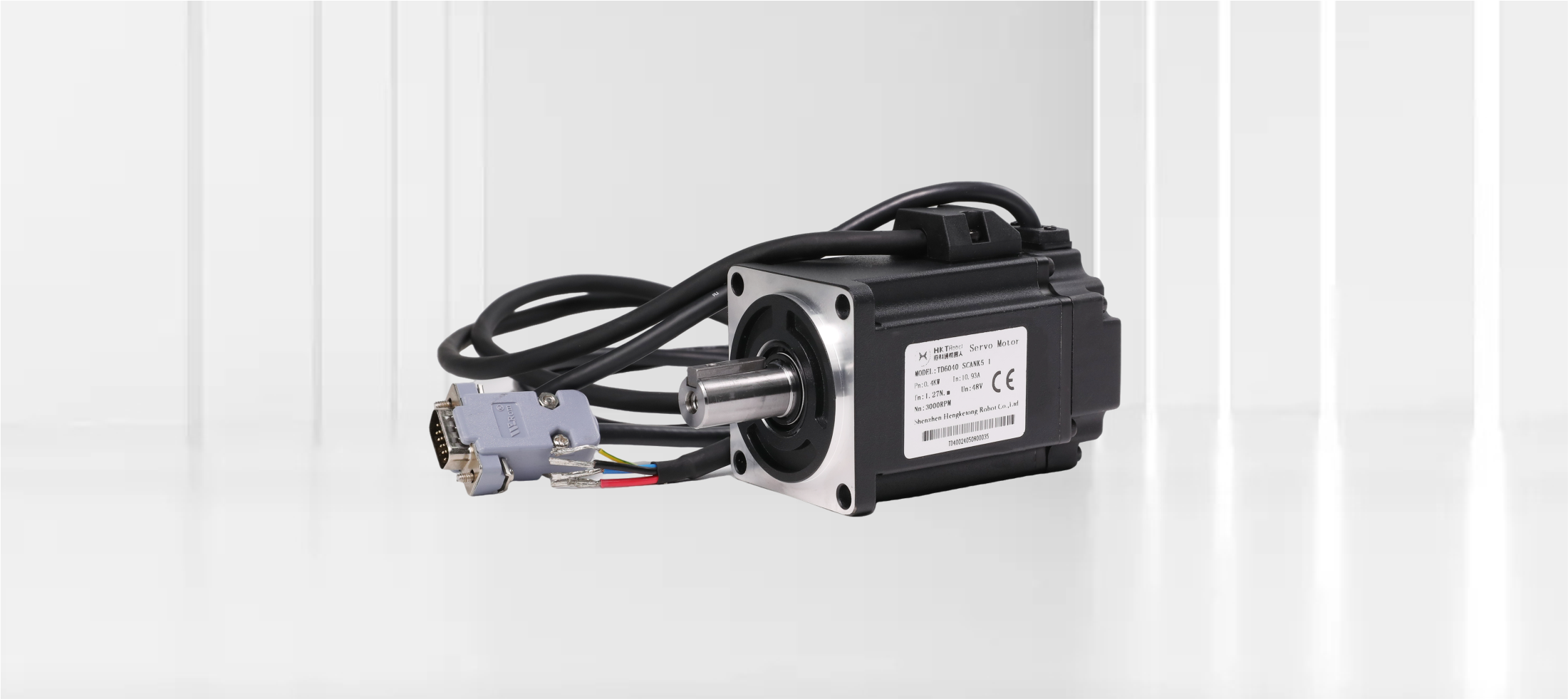
Within AGV drive systems, AMRs, industrial robots and warehouse automation equipment, servo motors and braking mechanisms form a key part of system safety. A frequent misconception arises during system design: “Since the motor has a brake, can it be used to stop the rotation during motion?”
The answer is no.
A holding brake is engineered for static position locking after the motor stops. It is not designed for dynamic braking, speed reduction or torque management while the shaft is rotating.
1. The True Function of a Holding Brake: Position Locking Only
A motor holding brake is designed to:
-
Prevent downward drift or reverse movement when power is removed
-
Hold the servo in a fixed position after stopping
-
Provide static locking in safety-critical environments
It is not intended to stop a rotating axis. Using it in motion contradicts both its structure and its safety rating.
2. Engineering Reasons Why It Cannot Function as a Running Brake
1. Brake pads cannot engage at speed
High-speed engagement causes instantaneous friction damage, overheating and wear, leading to early failure.
2. Insufficient torque for controlled deceleration
Dynamic braking requires torque regulation, speed ramps and controlled energy dissipation—functions handled by the servo drive, not the brake itself.
3. Severe thermal accumulation
The holding brake cannot dissipate the heat generated from high-speed friction, resulting in coil overheating or pad carbonization.
4. Shock load damages mechanical components
A sudden lock-up transfers impact to the gearbox, bearings and drive wheel assembly, risking structural failure.
3. Safety Implications for AGV and Mobile Robotics
Misusing the brake can lead to:
-
Loss of holding capability during power-down
-
Inaccurate stopping during navigation
-
Load slipping when lifting or carrying goods
-
A significant drop in overall safety level
For warehouse robots, lift modules and AMR steering systems, such risks are unacceptable.
4. The Correct Method: Dynamic Braking via the Servo Drive
Dynamic braking must follow the proper control sequence:
-
Servo torque management
-
S-curve speed deceleration
-
Regenerative or resistive energy dissipation
-
Complete stop
-
Holding brake engagement
This method protects the transmission system and ensures long-term reliability in AGV chassis and robotic actuators.
5. Professional Recommendations for Designers
When developing AGV wheels, servo wheel modules, lift actuators or industrial automation mechanisms:
-
Use the brake only for holding
-
Never treat holding torque as dynamic braking torque
-
Ensure braking logic follows drive → stop → brake
-
Avoid mechanical lock during motion
-
Always size brake and drivetrain correctly for long-term use
Proper brake logic is essential to achieving high reliability and industrial-grade safety.
Share:
High-Performance Lifting Solution for Shuttle and AMR Applications
AGV Steering Wheel Technical Overview for AGV and AMR Systems